 Skip to main content
Skip to footer
Skip to main content
Skip to footer

You don’t need a warehouse-heavy free zone to sell online. You need a licence that covers e-commerce and a setup that matches your order volume.
Which UAE free zone fits your e-commerce business?
Most UAE free zones now licence e-commerce as an activity, not just the zones built around it. So the real question is fit, not whether the activity is available. A dedicated e-commerce zone gives you a purpose-built setup. A general-purpose zone gives you more flexibility if you also plan offline activity. Either route starts with getting an e-commerce licence in the UAE.
Best Free Zones for E-Commerce
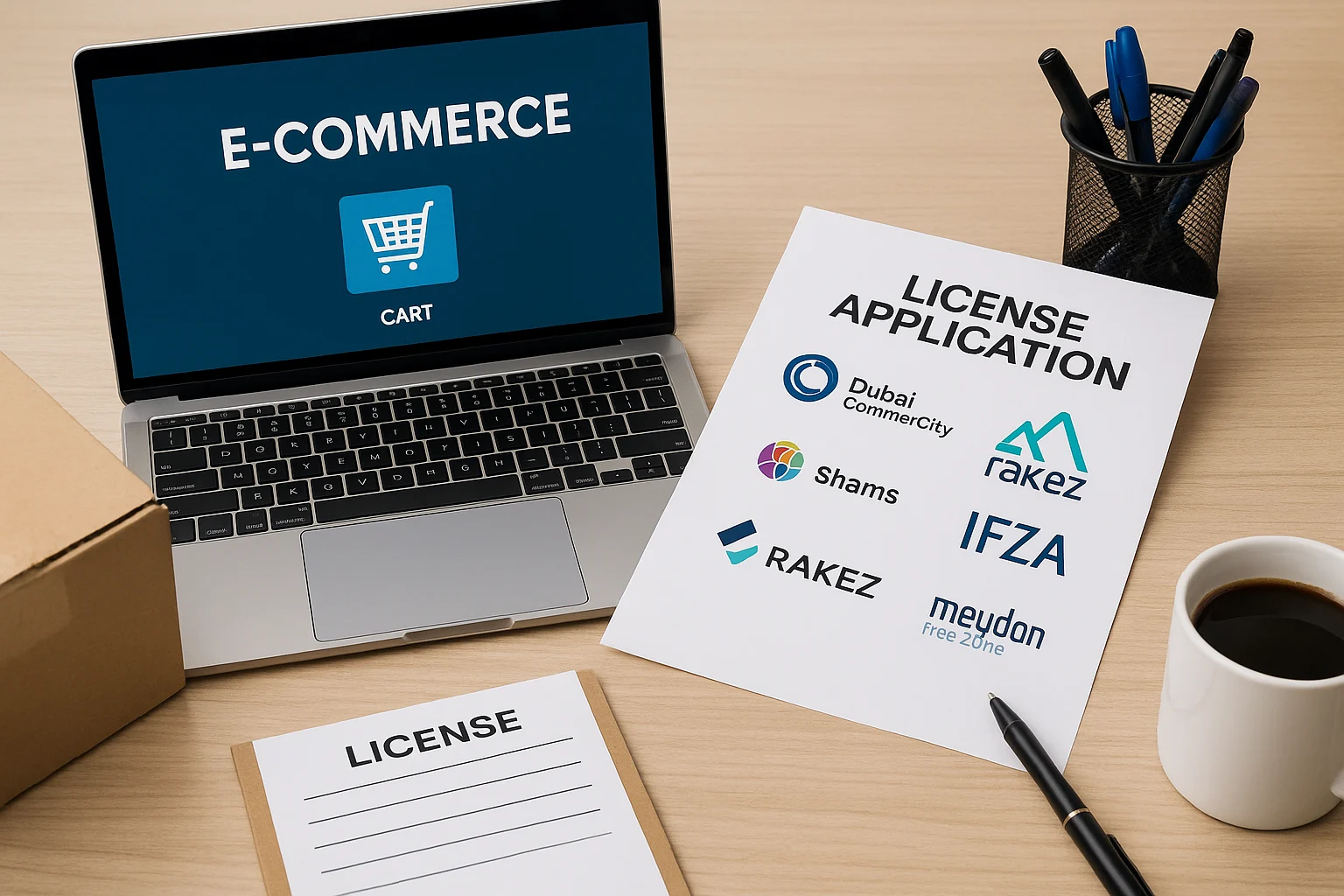
Purpose-built e-commerce zones. Dubai CommerCity is designed specifically around online retail, with logistics and fulfilment infrastructure, dedicated warehousing, and last-mile delivery partnerships built into the zone rather than added later. It suits a seller who expects real order volume and wants the zone’s own infrastructure to handle picking, packing, and dispatch.
General trading zones with e-commerce licences. Many general-purpose zones, including DMCC and IFZA, licence e-commerce as one of several permitted activities, so a free zone company in Dubai here can leave room for other activities later. These suit a seller who wants flexibility, runs a small team, or doesn’t need a fulfilment ecosystem built into the zone itself.
Logistics-focused zones. A zone with strong warehousing and port or airport access, such as Jebel Ali Free Zone, suits a seller carrying physical inventory rather than a dropship-only model. This matters most if you import stock in bulk and need bonded storage close to customs clearance.
Cost-conscious general zones outside Dubai. Zones in other emirates, including Ras Al Khaimah’s RAKEZ, often come with lower setup and renewal costs than the more established Dubai zones. They can suit a solo seller or small team where brand name matters less than keeping overheads down in year one.
The right choice depends on whether you want an ecosystem built around e-commerce, a flexible general licence that happens to cover it, or the lowest entry cost while you test the business.
Cost vs Marketplace Acceptance
Cost changes from one zone to another, along with the licence type and visa count. A purpose-built e-commerce zone often bundles logistics support into the package, which can offset setup cost with day-to-day convenience. A lower-cost general zone leaves you to sort out fulfilment and storage separately.
Marketplace acceptance matters just as much as cost. Amazon, Noon, and other UAE marketplaces ask for a trade licence whose activity description clearly covers e-commerce or online retail, and they match that against your business registration and bank account name. A general trading licence that doesn’t name e-commerce as a covered activity can delay your seller application even if the zone itself is well regarded. Make sure your licence activity explicitly covers online retail before you register anywhere. If you are still comparing general-purpose options, look at the popular Dubai free zones.
VAT and Zone Choice
Your free zone choice doesn’t change your UAE VAT obligations. Most UAE free zones are not “VAT-free zones” in the way sellers sometimes assume. Only a short list of Designated Zones gets special VAT treatment on goods movement, and e-commerce activity through those zones is still taxed under standard rules in most cases.
Once your taxable turnover passes AED 375,000 over 12 months, VAT registration is mandatory under the Federal Tax Authority’s VAT registration rules, regardless of which free zone issued your licence. Voluntary registration is available from AED 187,500 if you want to reclaim VAT on setup and inventory costs earlier. Factor this into your zone comparison. It’s the same cost either way, but sellers who assume free zone status means no VAT often get caught out at their first filing deadline.
Free Zone vs Mainland for Online Selling
A free zone e-commerce licence suits a seller focused on marketplaces, international shipping, and online-only sales. Direct sales into the UAE mainland through your own storefront have always needed something extra: a distributor, an agent, or a separate mainland presence. Since March 2025, there is also a second route: applying to Dubai’s Department of Economy and Tourism for your own branch licence or a temporary permit under Executive Council Resolution No. (11) of 2025, without a third-party distributor in the middle. That route still comes with a yearly branch-licence fee and needs sign-off from your free zone authority as well as the DET, so it suits a seller planning real mainland volume more than one still testing the market.
If your plan includes selling directly to UAE mainland customers through your own storefront at scale, compare a mainland e-commerce licence, the DET branch-licence route, and a distributor arrangement on cost and control. For the full picture on legal requirements either way, read our guide on selling online in the UAE.
Does Your Fulfilment Model Change Your Zone Choice?
A dropship-only seller, one who never physically holds stock, can usually run from a flexi-desk licence in almost any general-purpose zone, since there is no warehouse requirement to meet. The licence still needs to explicitly cover e-commerce or online retail as an activity; dropshipping is not licence-exempt just because you never touch the product yourself.
A seller holding physical inventory faces a different set of questions. Does the zone’s flexi-desk licence actually permit on-site storage, or does your licence type require a dedicated warehouse unit? Some zones draw this line strictly; others allow a small stockroom under a standard licence up to a certain size. Confirm the limit with the zone authority before you sign a lease, because finding out after you have committed to a unit can be an expensive surprise.
Conclusion
Pick a purpose-built e-commerce zone if online retail is your whole business. Pick a general-purpose zone if you want flexibility to add other activities. Either way, confirm that your licence activity explicitly covers e-commerce before you apply to sell on any marketplace.
Ready to get set up? Our team handles your UAE ecommerce licence application from start to finish.
This guide is general information. Free zone offerings and marketplace requirements change over time. Check with the free zone authority or a setup consultant for your own case.
FAQ
Which UAE free zone fits an e-commerce business?
Most UAE free zones now licence e-commerce, so the choice comes down to whether you want a purpose-built e-commerce zone or a general-purpose zone with more flexibility.
What is the cheapest e-commerce licence in the UAE?
Cost depends on the zone, licence type, and visa count rather than one fixed figure. Compare quotes across a shortlist of zones for your specific setup.
Can I sell to UAE mainland customers with a free zone e-commerce licence?
Yes, through an extra step. You can appoint a distributor, open a separate mainland presence, or since March 2025 apply to Dubai’s DET for your own branch licence or a temporary permit under Executive Council Resolution No. (11) of 2025.
Does selling from a free zone mean I don’t have to register for VAT?
No. Most UAE free zones aren’t VAT-exempt for e-commerce activity. Standard VAT registration rules apply once your taxable turnover passes AED 375,000 a year, regardless of which zone issued your licence.
